


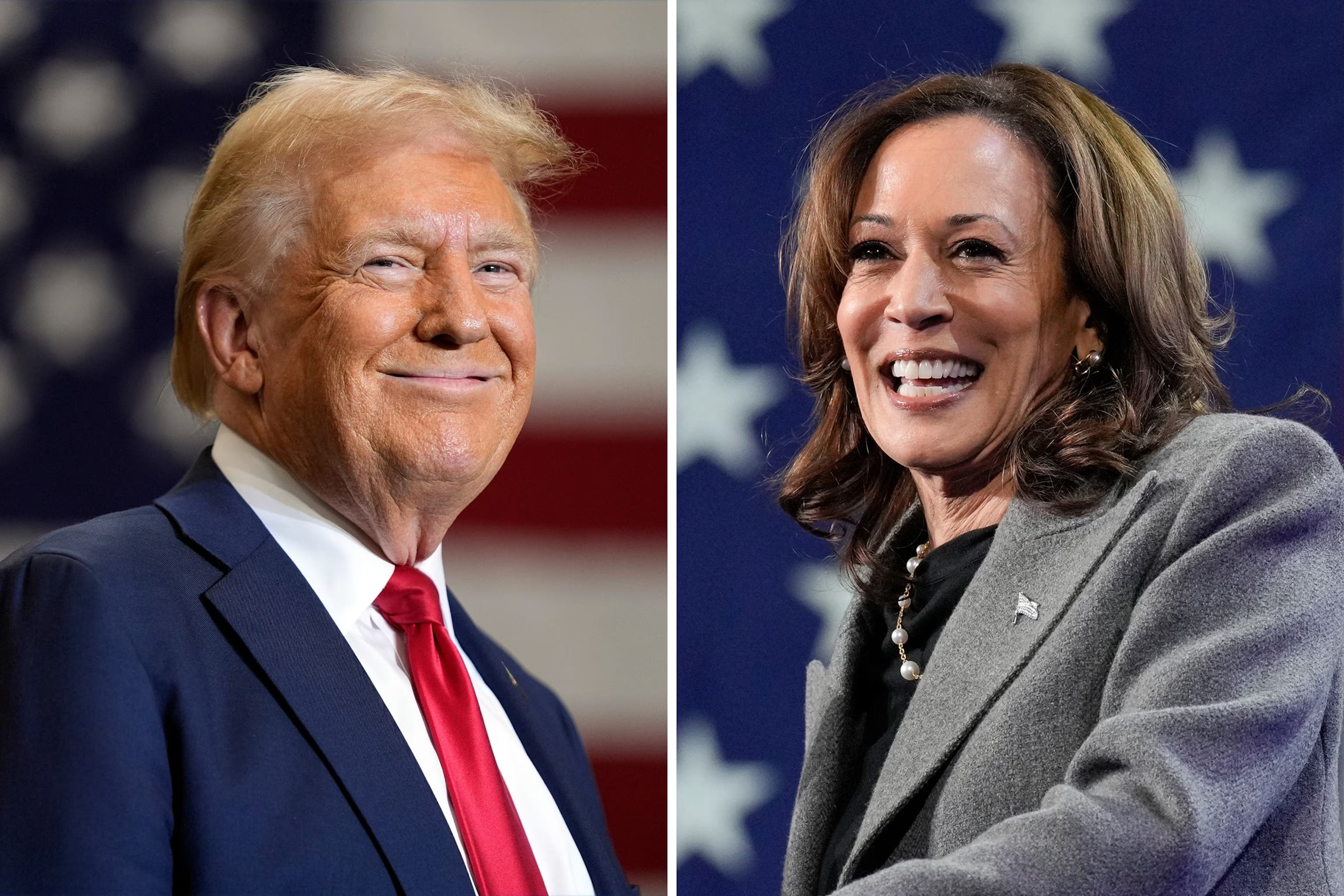
It’s June 2026. The midterms haven’t happened yet. Not a single candidate has formally declared. And yet, over $1.1 billion has already been traded on prediction markets trying to figure out who’s going to be the next president of the United States. Welcome to modern politics — where the 2028 race started before the ink dried on 2024.
Both parties are in the middle of succession fights. Republicans are trying to figure out who inherits the MAGA movement without being the guy who killed it. Democrats are asking a more fundamental question: who are we now? Neither party has a clean answer. But the polls and the prediction markets are already telling a story — and it’s worth paying attention.
THE REPUBLICAN SIDE: VANCE VS. RUBIO, AND EVERYONE ELSE
The GOP’s situation is genuinely fascinating. After Trump reimagined conservatism and won the White House twice, the next leader of the Republican Party will almost certainly need to carry MAGA values forward. That’s not speculation — a Washington Post-ABC News-Ipsos poll found that 71 percent of Republicans and Republican-leaning independents think GOP leaders should follow in Trump’s mold. So the battle isn’t really about ideology. It’s about who convincingly wears the crown.
Right now, two names dominate every poll and every prediction market.
J.D. Vance is the clear front-runner. A YouGov survey of 2,189 Republicans and Republican-leaning independents found that 63% said they would consider voting for Vance in a 2028 primary — the highest of any candidate tested. At CPAC, Vance reaffirmed his position as the presumptive nominee, with polls showing him at 40% support compared to Rubio’s 20%. On prediction markets, the picture is similar: as of June 2026, Vance holds approximately a 35% probability of winning the Republican nomination on Kalshi.
The sitting VP has all the structural advantages. He’s already in the building. He’s been governing. In a March 2026 interview, Vance indicated a 50-50 chance of running for president in 2028, signaling serious intent — which in political speak is basically a neon sign saying “I’m running.”
Marco Rubio is the wild card. His rise has been driven by an unlikely engine: foreign policy. Rubio’s chances of winning the Republican nomination have grown to almost 30% on Kalshi following the United States’ geopolitical operations on several fronts. Trump himself publicly suggested that Vance and Rubio would make a strong presidential ticket in 2028 — which either cements their rivalry or previews a joint future, depending on how you read it. Rubio publicly expressed support for Vance’s potential 2028 run, signaling party consolidation, but the markets clearly aren’t treating him as a supporting actor.
Beyond those two, the field thins quickly. Ron DeSantis registers at 35% “would consider” in the YouGov poll, followed by Donald Trump Jr. at 31% and Ted Cruz at 26%. DeSantis has the name recognition but carries the baggage of his 2024 collapse. Brian Kemp, who is retiring as Georgia governor due to term limits in 2027, is widely seen as a leading alternative to Trump within the Republican Party, and his decision not to run in the 2026 Senate race fueled speculation about a presidential campaign. He registers at just 4% in early polls, though — awareness isn’t translating to support yet.
Tucker Carlson holds around 6% on Kalshi, while DeSantis sits at 4% and Trump himself at 3%. The prediction market is essentially telling you: the field is Vance and Rubio, with everyone else as a long shot.
The big question hanging over all of this is whether the party can unite around someone who feels like Trump without being Trump — or whether any daylight from the MAGA brand is a fatal wound in a primary. Republicans are already debating who can inherit Trump’s movement, and whether any Republican can build a campaign by breaking away from it. There’s no answer yet. But the midterms will tell us a lot about which direction the party wind is actually blowing.
THE DEMOCRATIC SIDE: A PARTY STILL SEARCHING FOR ITSELF
If the Republican race is a succession fight, the Democratic race is an identity crisis. The party lost in 2024. The DNC released an autopsy. That report faulted Kamala Harris for writing off rural America and lacking sufficient negative attacks on Donald Trump, raising doubts about her 2028 prospects and contributing to a decline in her market price. So now what?
The polls and markets are pointing in different directions depending on which question you ask — and that itself is revealing.
Gavin Newsom is the prediction market favorite. As of June 2026, Newsom’s odds translate to roughly a 30% chance to be the Democratic nominee on Kalshi, and Polymarket is currently assigning him a 23% probability — the highest of any Democrat on that platform. He’s been loudly positioning himself as the party’s chief Trump critic, and rival Democratic operatives have viewed Newsom as the early frontrunner and “the guy to beat.” He’s also been coy in the way politicians are when they’re definitely running: in February 2026, he told The Guardian, “If someone else doesn’t have that fire, that sense of purpose and mission, then, yeah, I could see myself stepping into that void.”
The knock on Newsom is real, though. California is a hard brand to sell nationally. A 25% price on Polymarket means the market still sees the nomination as wide open, with about three-quarters of the probability spread across other candidates. He has room to run, but he’s far from inevitable.
Pete Buttigieg has been the surprise story of 2026. He’s been actively campaigning for Democrats across the country, building the kind of party infrastructure you need for a primary. A new Emerson College poll released on May 28, 2026 identified Buttigieg as the top potential contender in a hypothetical 2028 Democratic primary, with 18% support among likely Democratic primary voters. A Saint Anselm College poll of New Hampshire found Buttigieg leading at 29%, followed by Newsom at 15%, AOC at 10%, and Harris at 6%. New Hampshire matters — that’s his lane.
Alexandria Ocasio-Cortez is the most interesting figure in the Democratic field, and arguably the most unpredictable. She didn’t rule out a presidential bid during a public event, emphasizing her broader ambition to change the country. Vanity Fair reported that she is reluctant to launch a presidential campaign and noted that some have called for her to primary Chuck Schumer in the 2028 New York Senate elections. She’s polling around 9-11% nationally and has a grassroots fundraising operation that could be formidable. The open question: does she go for the White House or leverage her power differently?
Kamala Harris hasn’t gone away. A Lake Research Partners ranked-choice poll of 800 likely Democratic primary voters conducted in May 2026 found Harris leading Newsom 52-48% in a head-to-head RCV simulation, with 26% ranking her first and 17% ranking Newsom first. She publicly stated she is “thinking about” running for president again in 2028 — which is about as close to “I’m running” as a 2024 nominee can get without formally declaring. Whether the party wants a rematch is the bigger question.
Other names worth watching: Kentucky Governor Andy Beshear expressed comfort being cited as a potential 2028 candidate, and Georgia Senator Jon Ossoff has been building a national profile, with a $12 million fundraising haul for his 2026 reelection that signals serious ambitions. Bernie Sanders remains slightly more popular than other candidates among Vermont Democratic primary voters, a reminder that the progressive lane hasn’t vanished.
WHAT THE MARKETS ARE ACTUALLY TELLING YOU
Here’s the honest read on prediction markets this far out: they’re more useful as a vibe check than a forecast. Political science professor D. Stephen Voss put it plainly: “Polls two years out from a presidential election do not tell us much about who will win the nomination battle. They reflect name recognition, mostly — but being well known doesn’t guarantee voter support. Frontrunners often collapse quickly, while newcomers can rise once the electorate gets to know them. Even a year from now, the polls may not be predictive.”
That’s right. But the markets still tell you something. They tell you which names the most informed, financially-committed observers think are credible. Right now, those observers are saying: Vance vs. Newsom is the most likely general election matchup. Whether that’s what we get in November 2028 is anybody’s guess.
The midterms are the next real inflection point. Both parties’ 2028 fields will look materially different after November — some names will rise, some will crater, and a few candidates nobody’s talking about yet will quietly start making moves. That’s how this always works.
The race is on. It just doesn’t have a finish line anyone can see yet.