


After months of war, threats, and failed deadlines, the United States and Iran sat down in Switzerland over the weekend for something that felt almost unprecedented in recent memory: a real conversation. By early Monday morning, mediators from Qatar and Pakistan announced that both sides had agreed to a roadmap toward a final deal — with a 60-day clock now running. The headlines called it “encouraging progress.” The White House called it a foundation. JD Vance flew home looking like a diplomat.
But before you exhale, let’s slow down. Because there’s a lot more going on here than the feel-good framing suggests — and both sides of the American media are doing you a disservice by either overselling this as a historic peace or dismissing it as a sellout.
Here’s what you actually need to know.
How We Got Here
This didn’t come out of nowhere. Back in April 2025, Iran and the United States began a series of negotiations aimed at reaching a nuclear peace agreement, following a letter from President Trump to Iranian Supreme Leader Ali Khamenei. Trump set a 60-day deadline for Iran to reach an agreement. After that deadline passed without a deal, Israel launched numerous strikes against Iran, igniting a war between the two countries.
That’s the context nobody’s leading with. We didn’t just wander into diplomacy. We stumbled into it after a shooting war. And now we’re trying to negotiate a lasting peace while the embers are still hot.
The new 2026 MOU — the memorandum of understanding both sides signed last week — is a 14-point framework that extends a ceasefire and sets the stage for talks on a permanent nuclear agreement. It calls for an end to military strikes, the reopening of the Strait of Hormuz to commercial shipping toll-free for 60 days, the lifting of the US naval blockade of Iranian ports, and a 60-day extension of the ceasefire.
So when you hear “deal,” understand what that word is actually doing here. This isn’t a peace treaty. It’s a framework to keep talking while everyone agrees — for now — to stop shooting.
What Happened in Switzerland
After roughly 12 hours of negotiations at the Bürgenstock resort overlooking Lake Lucerne, mediators from Qatar and Pakistan said the two sides had made “encouraging progress” and agreed on a roadmap toward a final deal within 60 days. The US delegation was led by Vice President JD Vance, alongside envoys Steve Witkoff and Jared Kushner. On the Iranian side, Parliament Speaker Mohammad Bagher Qalibaf and Foreign Minister Abbas Araghchi led negotiations.
The wins from the weekend, at least on paper, are real. Tehran agreed to allow United Nations nuclear inspectors back into the country, which Vance called “a major milestone for the American people and the first step in permanently denuclearizing Iran.” Three working groups were established — one focused on nuclear issues, one on sanctions, and one on a monitoring and dispute resolution mechanism. A “deconfliction cell” between the parties and authorities in Lebanon was also agreed upon to prevent fighting from erupting there again.
Iran’s Foreign Minister called it “major progress.” The Swiss Foreign Ministry praised the “constructive progress.” Vance said the sides had laid “a very good foundation.” Everyone was cautiously optimistic.
And then Trump posted on Truth Social while the talks were still happening.
The Elephant in the Room
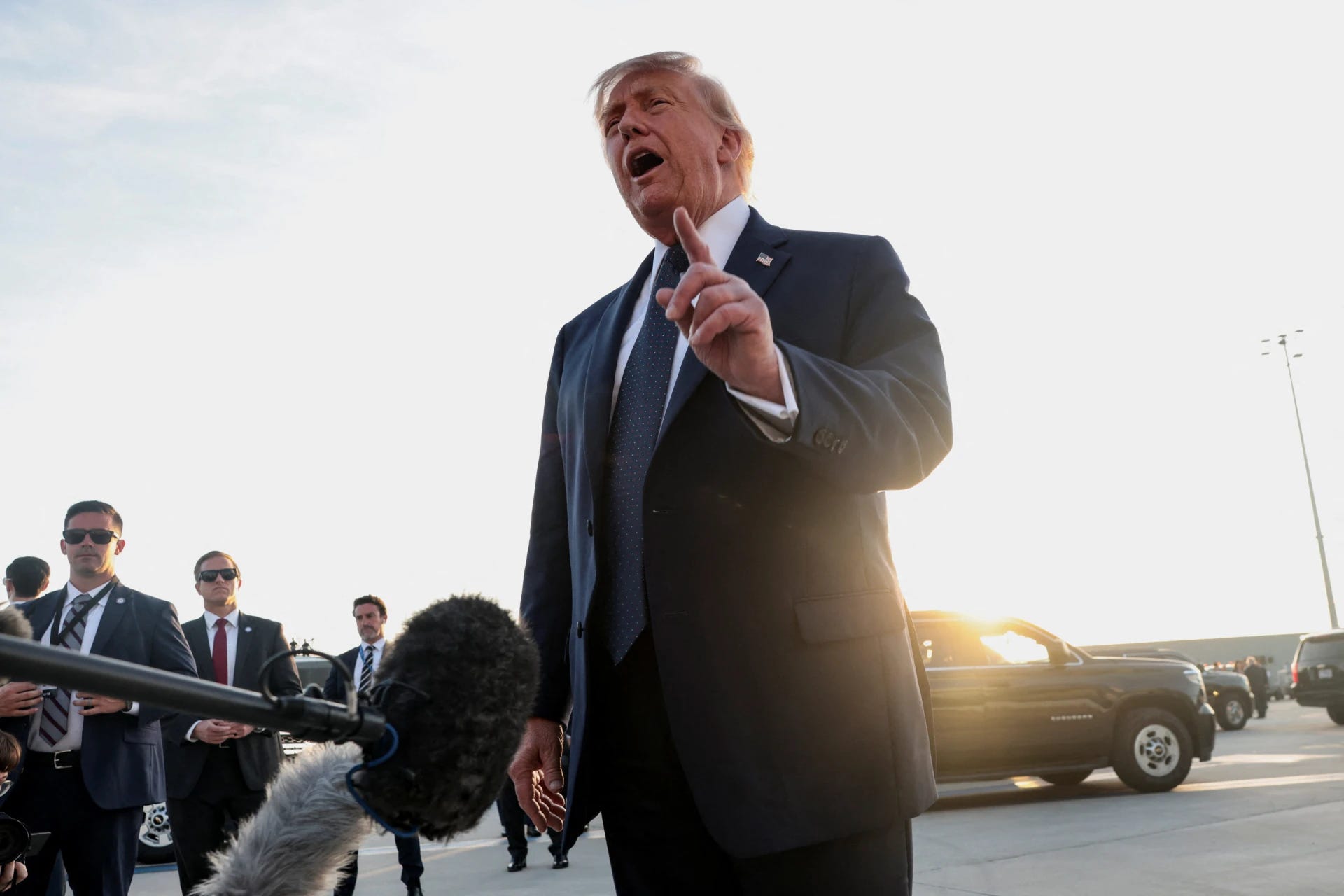
Here’s where it gets real. Sunday’s discussions were strained as President Trump threatened further attacks on Iran as Vance sat for negotiations with Iranian officials. That’s not a minor footnote. The sitting Vice President of the United States was in a room trying to build trust with Iranian counterparts while the President of the United States was publicly threatening to bomb them again.
Iranian state media reported negotiations were briefly disrupted Sunday following remarks by President Trump before discussions resumed. Briefly disrupted. Meaning they almost fell apart before they produced anything.
This is the dynamic you need to understand going forward: the American negotiating team and the American president are not always singing from the same sheet of music. That’s not a partisan shot — it’s just the reality on the ground. It creates enormous uncertainty for Iran, and it creates enormous uncertainty for the markets, for the region, and for the 60-day timeline everyone is now banking on.
What’s Still Unresolved — And It’s A Lot
The honest read of this deal is that the easy part is done. Everyone agreed to keep talking. The hard part hasn’t started.
Key issues, including the final status of Iran’s nuclear program, remain unresolved and are expected to be discussed in later negotiations during the ceasefire period. And here’s the core tension that no agreement has been able to bridge: Iranian President Masoud Pezeshkian said on Sunday, “What is certain is that we will never back down from the right to enrich uranium, and the other side is also forced to accept it.”
Meanwhile, Vance said negotiators were focused on securing Iran’s enriched uranium stockpile to make it “effectively impossible” for Tehran to rebuild its nuclear program.
Those two positions are not compatible. Iran says enrichment is non-negotiable. The US says the nuclear program has to be permanently ended. You can’t paper over that with a 60-day roadmap — eventually, someone has to blink. And right now, nobody knows who that’s going to be.
The framework deal also does not include the Iranian ballistic missile program or its network of non-state allies in the Middle East. That means Hezbollah, the Houthis, and Iran’s broader regional influence are all off the table — for now. Israel is not happy about that. Israeli Prime Minister Benjamin Netanyahu said Israeli troops would remain in southern Lebanon “as long as necessary” and promised he would “not allow Iran to acquire nuclear weapons.”
Israel was not part of these talks. And Israel has already demonstrated — repeatedly — that it is willing to take unilateral action when it feels its security is at stake. The fighting between Israel and Hezbollah has repeatedly threatened to derail peace efforts. On Friday, planned US-Iranian talks were postponed after Israel launched deadly attacks in Lebanon following the deaths of four of its soldiers in combat.
Think about that. The talks almost didn’t happen because of something Israel did — and Israel isn’t even at the table.
The Strait of Hormuz: The Economic Wildcard
Don’t sleep on this part of the story. Under the memorandum, both sides agreed to reopen the Strait of Hormuz toll-free for at least 60 days. The Strait of Hormuz is one of the most critical shipping lanes on the planet — roughly 20% of the world’s oil passes through it. When it gets disrupted, gas prices move. Markets move. Economies feel it.
Iran’s Islamic Revolutionary Guard Corps announced Saturday it was closing the Strait again in response to Israeli strikes in Lebanon — even as the MOU was technically in effect. Trump warned on Truth Social that the United States could impose tolls in the Strait of Hormuz if negotiations fail to produce a lasting agreement before the ceasefire expires.
So we have Iran threatening to close the Strait, the US threatening to impose tolls on it, and an agreement that says it should stay open. This is not a stable situation.
The Bottom Line
Here’s my take, and take it for what it’s worth: this is real progress wrapped in enormous fragility. The fact that senior American and Iranian officials sat in the same Swiss resort for 18 hours and produced something — anything — is genuinely significant given where we were a year ago.
But the media coverage is doing what it always does — picking a lane. Either this is Trump’s greatest diplomatic triumph, or it’s a capitulation that leaves Iran’s nuclear ambitions intact. Neither framing serves you.
The truth is messier. Substantial differences remain on nuclear issues, regional security, sanctions, and the future of Lebanon. Both sides left Switzerland with a framework for continued engagement and new channels designed to prevent escalation — but experts warn the next phase of technical negotiations could prove far more challenging than the political agreement itself, and may ultimately take longer than the 60-day timeline outlined in the interim deal.
Sixty days. That’s the window. In that time, working groups have to hash out Iran’s nuclear program, sanctions relief, and a monitoring mechanism — issues that have stumped every administration going back decades. Israel will continue to operate according to its own interests. Trump will continue to post. And Iran will continue to insist on its right to enrich uranium.
Watch what happens in Lebanon. Iran’s Foreign Minister called the Lebanon deconfliction cell “the first real test” of the negotiating process. If that holds, there’s something to build on. If it collapses — and given the history, that’s a real possibility — the 60-day clock won’t matter much.
This is not a peace deal. It’s a bet that two countries who were just at war can find enough common ground in two months to avoid going back to it. That bet might pay off. But don’t let anyone tell you it’s already won.