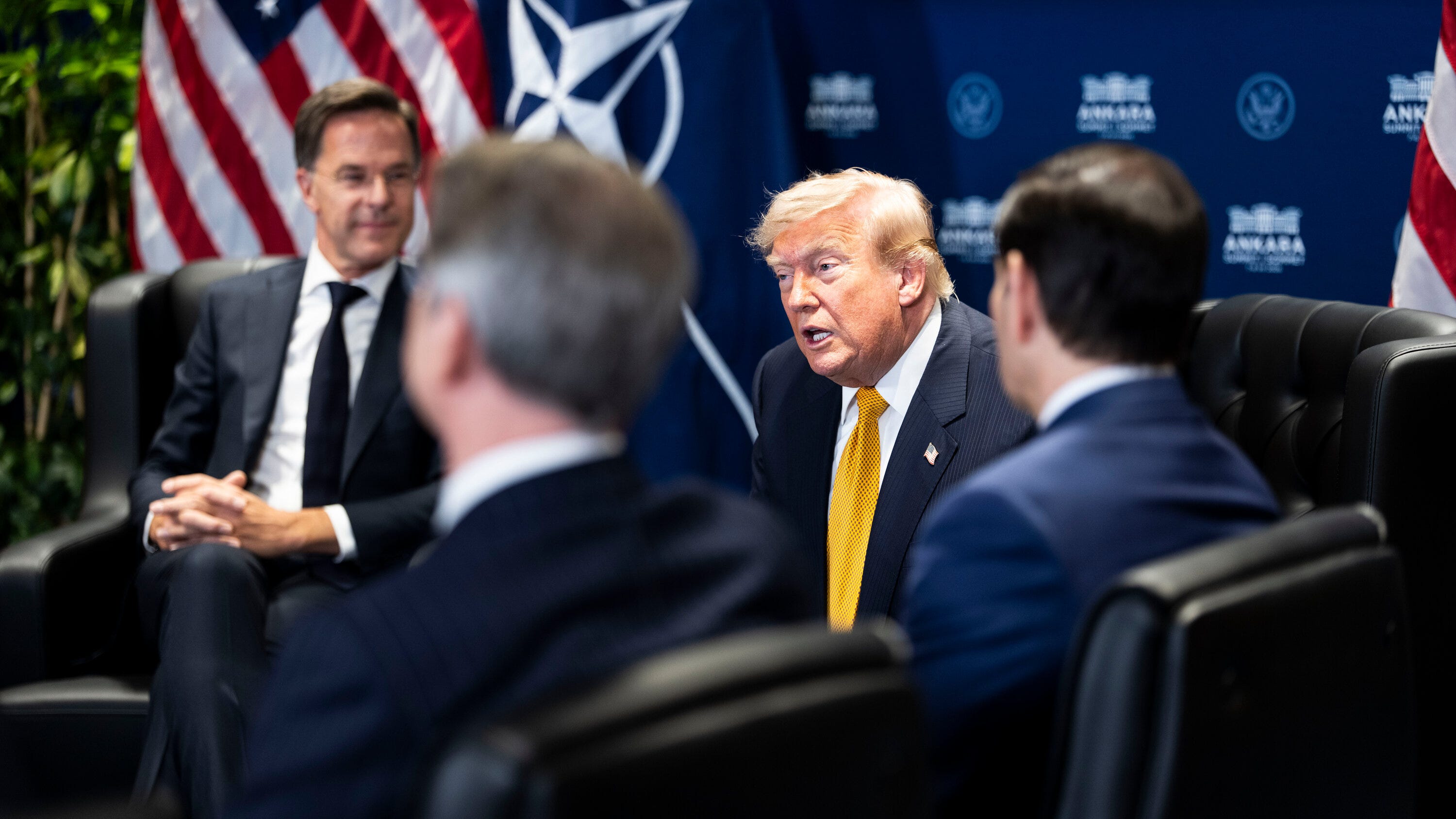
Throughout the President's political career, Trump has argued that many NATO members rely too heavily on U.S. military protection while contributing too little to the alliance's collective defense. His administration repeatedly urged member states to meet NATO's guideline of spending at least 2% of their gross domestic product (GDP) on defense.
“If they're not going to pay, I'm not going to defend them… they have to pay their bills.”
- President Donald Trump
In response to the growing pressure from Washington, Spain has defended its record within the alliance. Prime Minister Pedro Sánchez has emphasized that Spain contributes through military deployments, strategic bases, and NATO operations, arguing that commitments extends beyond defense spending figures.
“Spain is a serious, responsible and committed NATO ally”
- Prime Minister Pedro Sánchez
Spain has frequently been among the countries spending below that benchmark, although recent Spanish governments have announced plans to increase military investment over the coming years. Spanish leaders have maintained that they remain committed to NATO while balancing defense priorities with domestic economic and social needs.
Trump has criticized countries that fall short of NATO's spending goals, arguing that unequal financial contributions place an unfair burden on American taxpayers. His comments have sparked debate across Europe, with supporters saying they encourage fairer burden-sharing and critics warning that such rhetoric could weaken alliance unity.
NATO officials have consistently emphasized that the alliance is built on collective defense and political cooperation. Since Russia's full-scale invasion of Ukraine in 2022, many member nations have accelerated military spending, and several countries that previously fell below the 2% guideline have increased their defense budgets.
“Europe and North America must continue to stand together.”
- Former NATO Secretary-General Jens Stoltenberg
Spain continues to play an important strategic role within NATO despite spending debates. The country hosts key military facilities, including the naval base at Rota and the Morón Air Base, both of which support NATO and U.S. operations in Europe, the Mediterranean, and beyond.
The discussion over Spain's defense spending reflects a broader question facing NATO: how to balance national priorities while maintaining a strong and united alliance. As security challenges evolve, the debate over defense investment is likely to remain a central issue in relations between the United States, Spain, and NATO.
Whether Trump's approach leads to stronger burden-sharing or creates additional political tensions remains a subject of debate. What is clear is that defense spending and alliance commitments will continue to shape transatlantic relations in the years ahead.